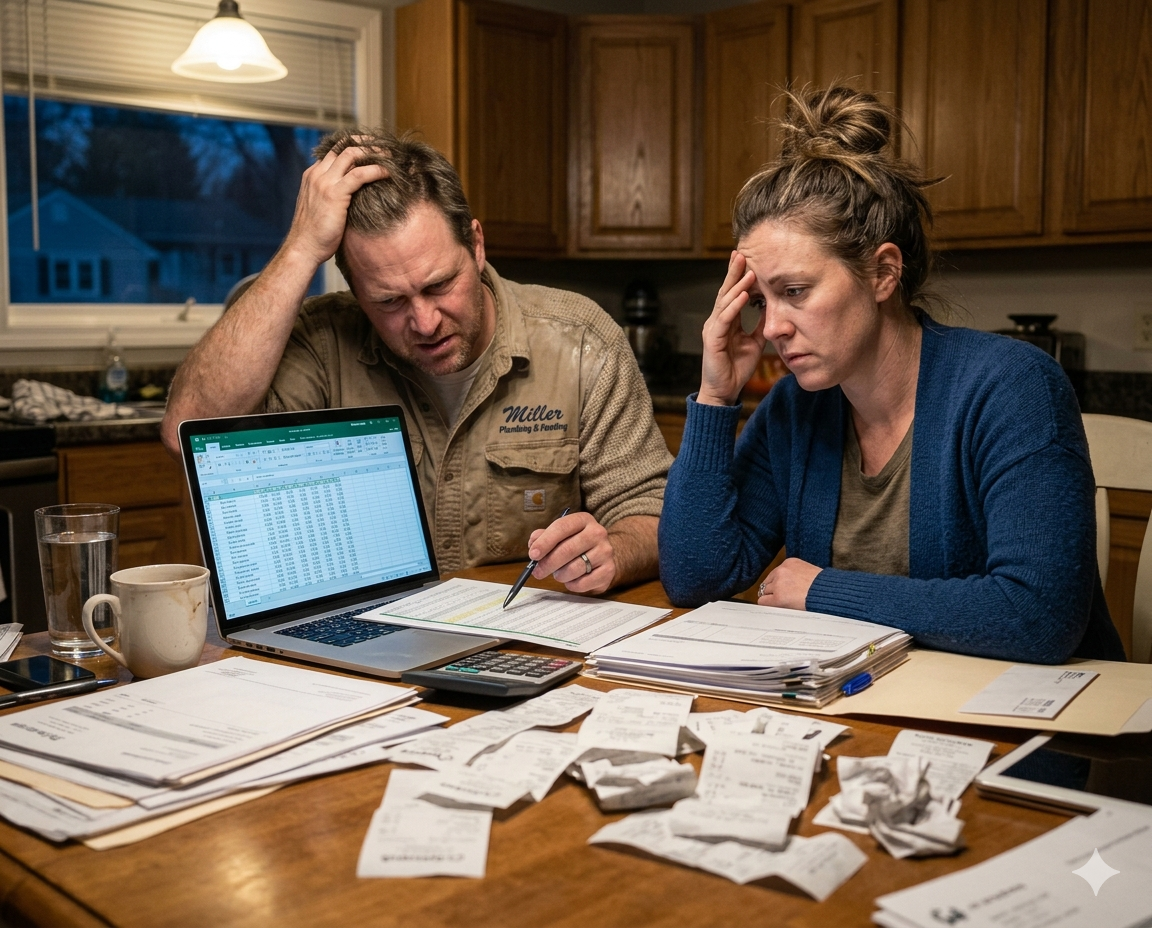
Seven-fifteen in the morning. You’re driving to the first job, coffee in hand, and your phone starts going. First tech doesn’t know if the morning job has a gate code. Second tech wants to know if they should pick up materials before heading to the site or after. Third tech asks whether they’re doing the full scope today or just the rough work. Fourth tech calls to say he’s running twenty minutes late — should he go to the first job or skip to the second?
Four calls before you’ve cleared the first stop. If this is your morning, you already know the problem.
Why This Happens
The phone-tag dispatch problem is almost always a symptom of the same root cause: job information lives in the owner’s head, not in a system the crew can access. Your people aren’t calling because they’re incapable of working independently. They’re calling because the information they need to start isn’t anywhere they can find it.
Address, scope, access notes, customer preferences, what to bring, what the job before them left in place — all of that exists, but it exists in a text thread from last night, a note on the kitchen table, or your memory from the customer call two days ago. When the crew can’t find it, they call you. Every time.
What Job Information Should Look Like for Your Crew
The fix is structural. Before your crew leaves for the day, each person should be able to open their phone and see exactly what they’re doing, in what order, with all the information they need to start without calling.
That means each job entry includes:
- The address, with a tap-to-navigate link
- What the scope is — not a vague “do the Johnson job” but specific: “replace master bath fan, patch ceiling around fixture, test ventilation”
- Access notes — gate codes, lock boxes, dogs, “park on the street”
- Customer contact number if there’s an issue on-site
- Materials or tools that need to come from the shop
When that information is in the system and each crew member’s schedule is visible before they leave the house, the morning calls drop dramatically. Your phone is quiet until something actually needs your attention — a scope question that couldn’t have been anticipated, a materials issue, a customer request to change the time.
The Dispatcher Problem at Scale
When you’re running one crew of two or three people, you can manage the morning dispatch through sheer familiarity with everyone’s schedule. You know who goes where because you built the schedule and it’s fresh in your mind.
When you get to two or three crews running simultaneously — common as you grow past the owner-operator stage — that mental model breaks down. You’re trying to hold three different schedules, three different job scopes, and three different customer communication threads in your head at the same time, plus handling calls and new inquiries during the day.
The contractors who successfully manage multiple crews are the ones who move job management out of their head and into a system that everyone can see. It’s not more complicated than a shared schedule with job notes. But it has to be the single source of truth — not “check the system but also text me” — or people revert to the phone call.
Same-Day Schedule Changes Are Where Things Fall Apart
The trickiest dispatch problem isn’t the planned schedule — it’s what happens when a job runs long, a customer reschedules, or a new emergency job comes in. Now the carefully planned day needs to be reorganized, and if the reorganization happens through text messages to three different people, something will get missed.
A tech who was supposed to go to the Patel job after the morning job doesn’t see the text because they’re on a ladder. By the time they see it, they’ve driven to the wrong address. The Patel customer is calling to ask where the crew is. You’re caught in the middle of a mess that started with a single schedule change.
When the schedule update happens in one place and everyone sees the current version on their phone, the same-day changes propagate automatically. No one is working from an outdated text thread.
Getting Your Time Back
The reason dispatch efficiency matters isn’t just productivity — it’s your ability to focus on the things that actually require your skill and judgment. Estimating, customer relationships, quality checks, hiring, business development — those things get your attention when the operational noise quiets down.
The morning phone calls are stealing forty-five minutes of thinking time every single day before 8am. Over a year, that’s a significant number of hours you spent being a human dispatcher instead of running a business. Put the information in the system and let the system do the dispatching.
Your crew doesn’t want to call you any more than you want to answer. Give them what they need to work independently and watch the morning get a lot quieter.