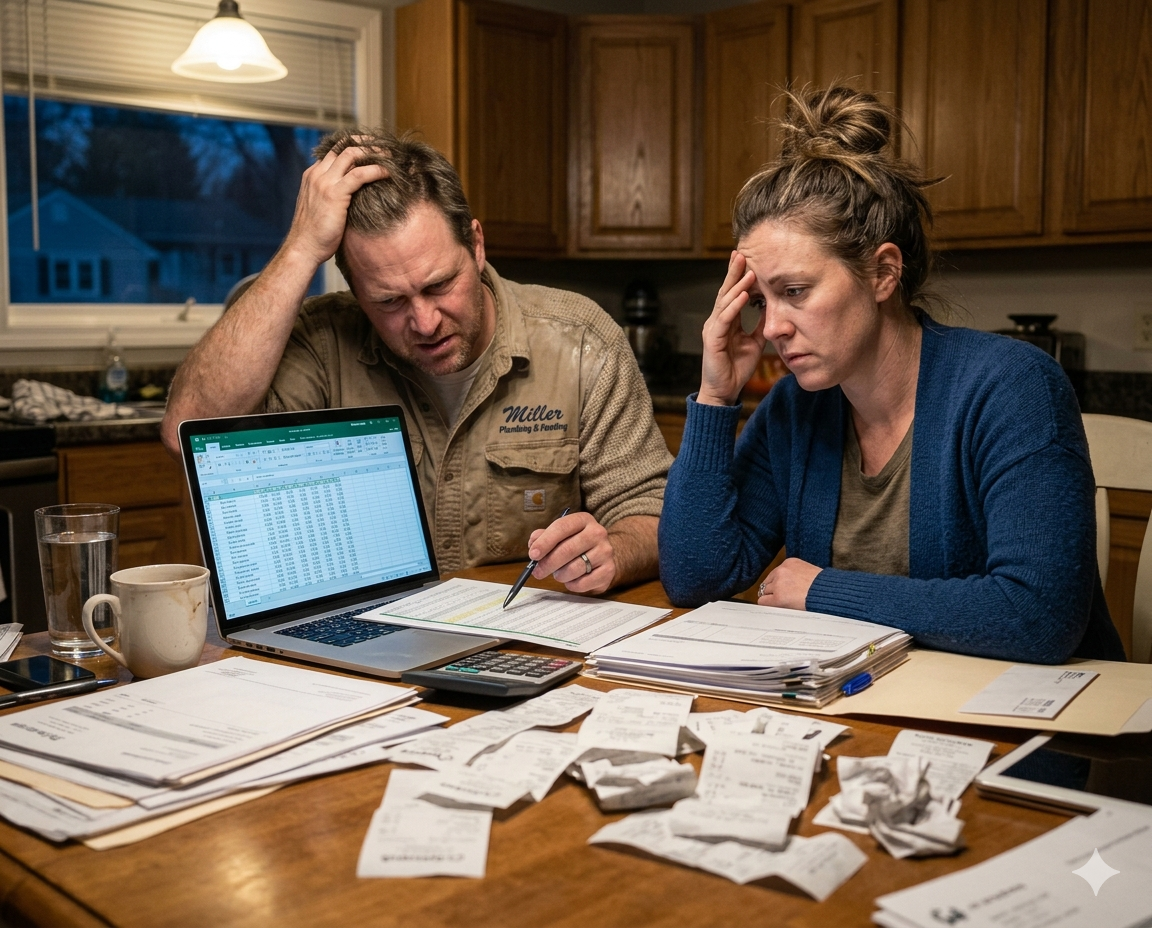
Every seasonal trades contractor knows the feeling. Peak season is a blur — more work than you can handle, phones ringing, crews stretched. Then the season ends. The calls slow down. You do a few jobs here and there, but nothing like the summer pace. Cash flow tightens. You start wondering whether to let a helper go or keep paying them through the slow stretch.
This is normal. It’s also manageable — if you use the slow season as a building period instead of a waiting period.
The Off-Season Is When the Next Season Gets Built
The busiest landscaping companies in spring didn’t get that way by accident. They spent January and February building their pre-book list. They sent follow-ups to every customer from the previous season. They made offers for early-season service at a predictable price for customers who commit before April. They marketed when competitors went quiet.
By the time demand picks up in March, their schedule is already substantially full from pre-booked work. The companies that waited until April to start booking are chasing capacity while competitors are already operating at volume.
The same pattern holds for roofing, power washing, paving, and any trade with a distinct busy season. The off-season is the opportunity to get ahead of the curve — but only if you have a way to reach your past customers and track who you’ve contacted.
Re-Engaging Past Customers
Your best source of off-season leads is the customers you worked for last season. They already trust you. They already know your quality. If you do work that needs to be done on a recurring basis — lawn care, gutter cleaning, pressure washing, seasonal property services — a significant portion of them will re-book if you ask.
The problem is that most contractors don’t ask systematically. They mean to follow up with the customer from last October, but they can’t find the number, or they forget, or they feel like they’re bothering people.
Having a customer list that you can reach out to in bulk — “just reaching out to past customers about getting on the spring schedule early this year” — takes one hour and generates a list of warm leads that would have cost significant money to generate through advertising.
The customers who don’t respond immediately aren’t necessarily lost. They may respond to a second message in February. A follow-up system that resurfaces unresponsive customers after thirty days is basic, but most seasonal contractors aren’t running one.
Pre-Booking Creates Predictability
There’s a meaningful difference between a business that enters peak season with a full calendar and one that enters peak season hoping the phones ring. The pre-book approach — offering existing customers early scheduling, sometimes at a set rate — is a legitimate strategy for smoothing the curve.
Customers like it too. They avoid the scramble of calling in April when every contractor in town is suddenly slammed. They know what they’re going to pay. They feel taken care of.
The contractors who successfully pre-book their season have a few things in place: a clear offer (what service, what timeframe, what price), a way to reach past customers easily, and a way to collect a small deposit or confirmed booking rather than just a “yeah sounds good” that evaporates by March.
The Off-Season Is the Right Time to Get the Operations Right
Busy season is the worst time to implement new systems. Everyone is moving too fast, there’s no margin for the learning curve, and any friction in a new process gets magnified when you’re trying to run at volume.
The off-season is when you should be doing the setup work that makes peak season run better: building out your service catalog with accurate pricing, cleaning up your customer records, setting up the automated follow-ups you kept meaning to turn on, getting your estimate templates dialed in.
Contractors who spend January and February doing this work enter the season with operations ready to handle volume. The ones who put it off until summer try to do it while also managing a full job load — and usually end up not doing it at all.
Marketing When Competitors Go Quiet
Digital marketing — Google ads, local SEO, social media — performs differently in the off-season. Competitors pull back. Search volume drops slightly but doesn’t disappear — people still move, still have projects they’re planning for spring, still do searches for contractors even in December.
A consistent marketing presence through the slow months means your business stays visible when competitors go dark. When the spring demand spike arrives, your reviews and your digital presence are fresh rather than stale. You’re not starting from zero in April — you’re building from a base that stayed active.
The slow season will always be slower. That’s the nature of seasonal work. But the contractors who treat it as a building period, not a waiting period, come out of it ahead — and stay ahead through the season.