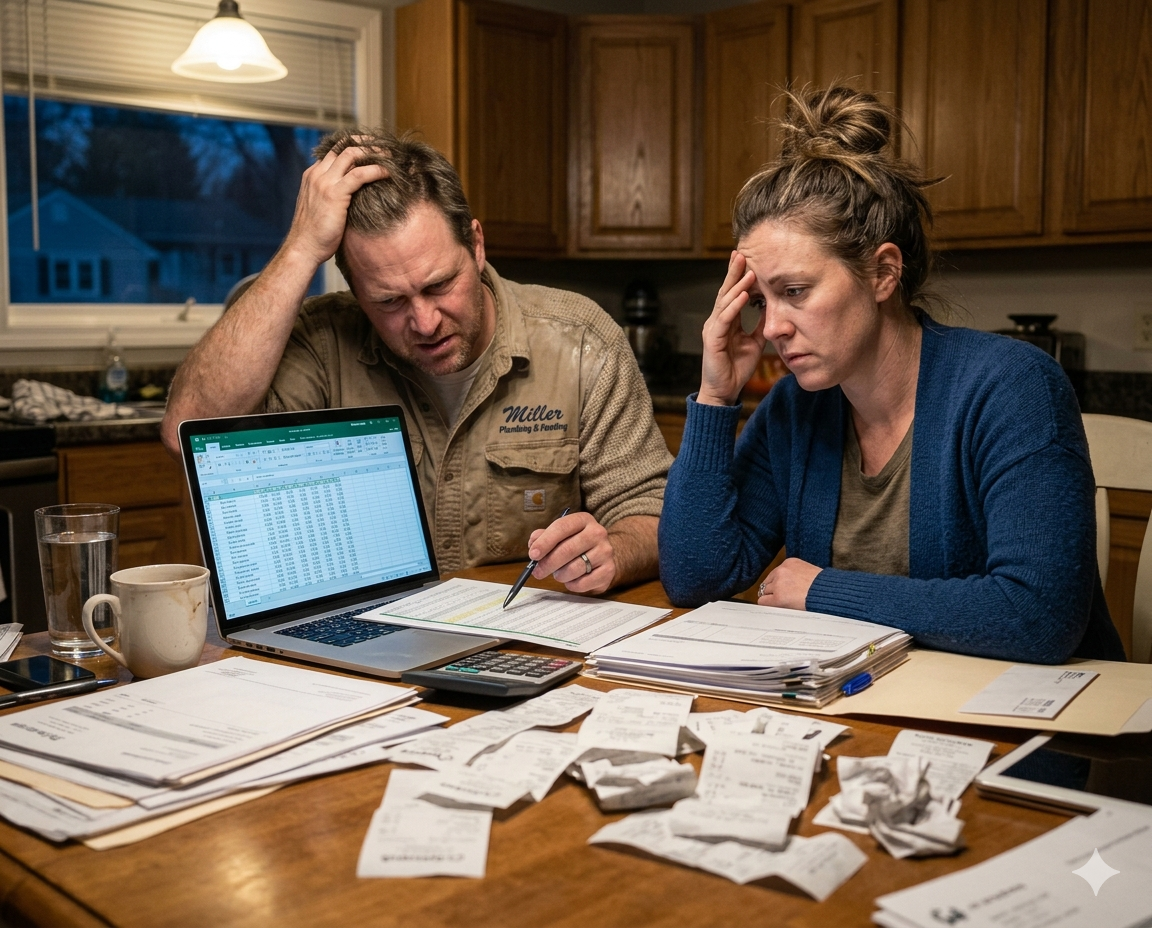
Paper invoices feel like the zero-cost option. No software to pay for, no systems to learn, no change to manage. Just print it, hand it over or mail it, and wait for a check.
But paper invoices are not free. They carry real costs — in your time, in delayed payment, in customer experience, and sometimes in lost business. When you add up those costs honestly, paper starts to look a lot more expensive than the digital alternative.
The Time Cost
Let’s start with the time it takes to produce a paper invoice. At minimum, it’s the time to manually enter the job details into whatever template or software you’re using, print it, and then either hand-deliver it or stuff it in an envelope and mail it. If you’re doing it at the end of the day after a full schedule of jobs, it’s also the cognitive cost of remembering and reconstructing details from work that happened eight hours ago.
For a business doing 20 invoices a week, even 15 minutes per invoice is five hours. For most contractors, it’s more. And it’s five hours of work that doesn’t move the business forward — it’s pure overhead.
Now consider that this same information almost certainly already exists somewhere in your business — in the job record, in the estimate, in the technician’s notes. Digital invoicing pulls from that data automatically. The invoice is built, not re-entered.
The Cash Flow Cost
Paper invoices take longer to pay. There are a few reasons for this:
Mailing adds days. A paper invoice mailed to a customer might arrive two to three business days after the job is completed. That’s days of float before they even see the invoice, let alone decide to pay it.
Checks take time to process. Even after a customer writes a check, it needs to be mailed, received, deposited, and cleared. The total cycle from “invoice sent” to “money available” can be two to three weeks — versus two to three minutes with an online payment.
Paper invoices are easy to misplace. A customer who doesn’t have a dedicated “bills to pay” system may genuinely lose a paper invoice in a pile on the counter. They’re not refusing to pay. It’s just gone.
There’s no easy payment call-to-action. A paper invoice requires the customer to take multiple steps: find their checkbook, write the check, find an envelope, find a stamp, remember to mail it. Online payment is a single click. Friction is the enemy of prompt payment.
For a business averaging $50,000 in monthly receivables, reducing average collection time from 28 days to 12 days is a $26,000 improvement in available cash at any given time. That’s not a rounding error — that’s your operating cushion.
The Customer Experience Cost
Your invoice is a touchpoint. It’s communication. It’s part of the overall experience a customer has with your business.
A professional digital invoice — branded, itemized, with a clear summary of work done and a simple way to pay — reinforces the quality of the work you just did. It says: we are a professional operation. We respect your time.
A handwritten paper invoice or a printed form that looks like it came from 2003 says something different. It might be fine — customers care most about the work itself — but it misses an opportunity to reinforce the impression you want to leave.
For customers who are on the fence about leaving a review or referring you to a neighbor, the professionalism of the overall experience matters.
The Follow-Up Cost
When a paper invoice goes unpaid, following up is uncomfortable and manual. You either call — which most contractors dread — or you mail a reminder, which takes more time and adds more delay.
With digital invoicing, automated reminders handle this. The invoice was due, it’s unpaid, a friendly email goes out automatically. No phone call, no awkward conversation. Most customers pay on the first reminder without any friction.
Contractors who automate their follow-ups collect more of what they’re owed without any additional effort — and without damaging the customer relationship.
Making the Switch
The good news: switching from paper to digital invoicing is not a major project. It doesn’t require replacing your entire business operation. It requires choosing a system that handles invoicing, connecting it to the rest of your job workflow, and starting to use it.
The upside is immediate: faster payment, less time spent on admin, a more professional customer experience, and better visibility into what you’re owed and when.
Paper was the default when there was no better option. There’s a better option now.