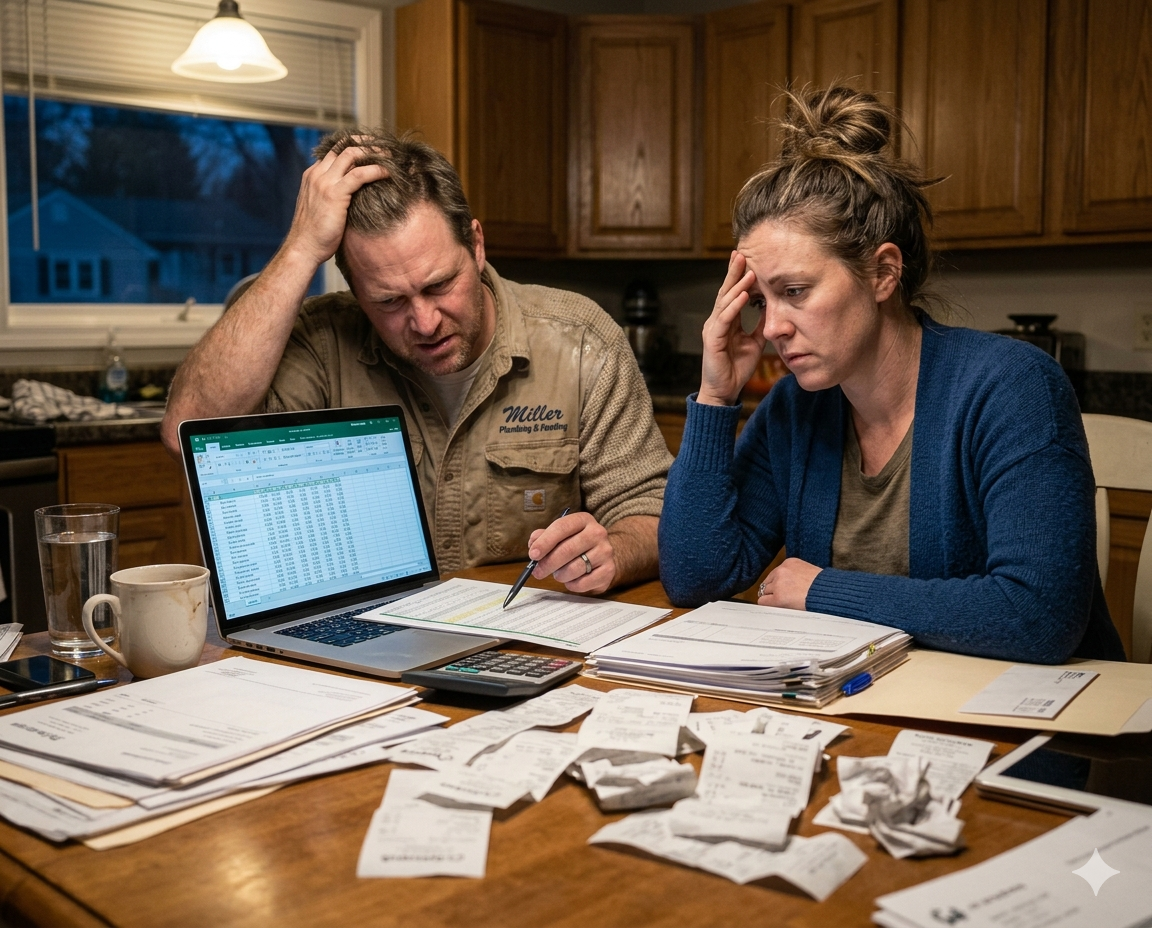
Cash flow is the lifeblood of any plumbing business. You can have a full calendar, a great reputation, and a crew that shows up every day — and still struggle to make payroll if your customers are slow to pay.
The frustrating part? Most late payments aren’t because customers don’t have the money. They’re because your invoicing process makes it easy to forget, delay, or deprioritize payment. Fix the process, and the money moves faster.
Why Plumbers Get Paid Slowly
Walk through the typical invoicing workflow for a small plumbing company:
The tech finishes a job, drives to the next one. Notes from the completed job either get called in, texted, or written on paper. At the end of the day — or end of the week, if it’s been a busy one — the owner or office manager compiles everything, builds the invoice, and emails it out. Sometimes that invoice goes out the same day. Often it’s two or three days later.
The customer gets an email with a PDF attached. Maybe they open it right away. More likely it sits in their inbox with fourteen other things they need to deal with. A week passes. They mean to pay it but keep forgetting. You haven’t followed up because you’re too busy running jobs.
Three weeks after the work was done, you’re sending a “friendly reminder.” Four weeks in, you’re having an uncomfortable conversation.
None of this is malicious. It’s just friction — friction in your process that creates friction in their payment behavior.
The Rule: Invoice the Day the Work Is Done
The single most impactful change a plumbing business can make to their cash flow is simple: send the invoice the same day the job is completed, not a few days later.
When you invoice while the job is still fresh in the customer’s mind, payment comes faster. They remember the work, they appreciate it, and the transaction feels natural. When you invoice days later, you’re asking them to reconnect mentally with something that’s already moved to the back of their mind.
Ideally, your tech sends the invoice from the job site the moment the work is done. The customer gets it within minutes. If you’ve made it easy to pay online — and you should — some of them will pay it before your tech even loads the truck.
Make Paying Easy
This sounds obvious, but many plumbing businesses still only accept checks or cash. That’s friction. Every barrier between “customer wants to pay” and “customer actually pays” extends your collection time.
Accept card payments. Accept digital payments. Send invoices with a “Pay now” button that takes them directly to a payment page — not to a form that requires account creation, not to a confusing checkout flow. One click, enter a card number, done.
When you remove the friction, customers who intended to pay quickly actually do.
Automated Reminders That Aren’t Awkward
Nobody likes making collection calls. They feel uncomfortable, they take time, and they strain the customer relationship.
The alternative is automated reminders that go out on a schedule — a gentle nudge at 7 days, a firmer follow-up at 14 days — that read as professional rather than desperate. Most customers, when reminded, pay without complaint. They genuinely just forgot, and an automated email treats them with the same dignity a human reminder would, without the discomfort on either end.
The key is setting this up once and letting it run. You shouldn’t be manually tracking who owes you what.
Deposits on Bigger Jobs
For anything over a few hundred dollars, get a deposit before you start. This is standard practice in most trades, and customers expect it from professional contractors. A 30–50% deposit at the time of estimate approval does three things:
- Confirms they’re serious — tire-kickers don’t pay deposits
- Reduces your collection risk — even if the final payment is slow, you’re not fully exposed
- Improves your cash flow — money in before money out on materials
If you’re not already taking deposits, start today. The customers who are worth working with won’t flinch.
The Compound Effect
Tighten each part of the invoicing cycle — faster send, easier payment, automated reminders, deposits on big jobs — and you might cut your average collection time from 30 days down to 12. On a $50,000 monthly revenue base, that’s nearly $20,000 more in your account at any given point in the month.
That’s the difference between comfortable and stressed. Get your invoicing process right, and the rest of the business gets easier.