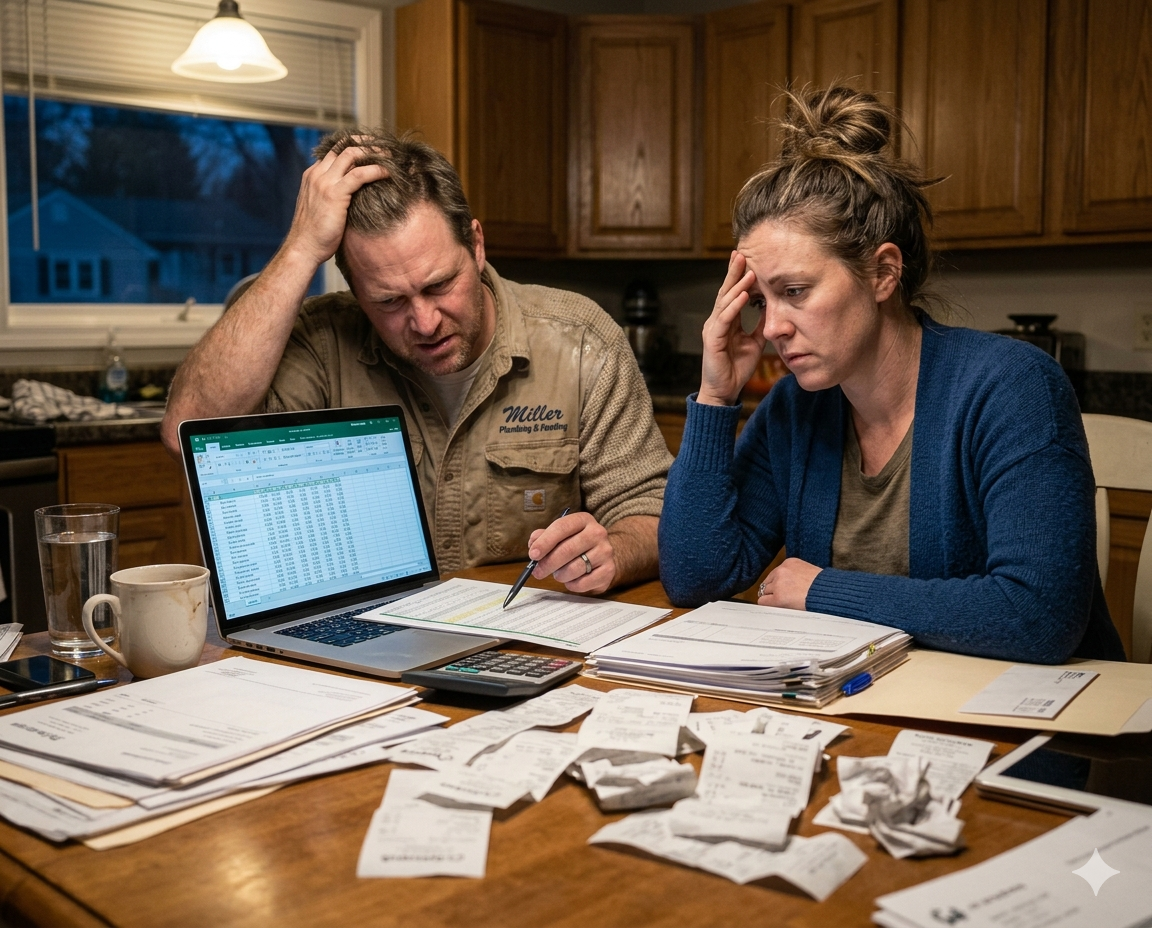
If you’ve been hanging and finishing drywall for more than a few years, you know the feeling. You priced a straightforward job — 1,200 square feet, level 4 finish, standard framing. Then the GC says the homeowner wants level 5 in the master. Then there’s unexpected moisture damage behind a wall. Then the window schedule slips and you’re waiting two days to finish the rough-in. Then the painter decides to change the timeline and you have to come back for touch-ups.
By the time the job is done, you’ve done 40% more work than you priced and you’re billing for the original number because you can’t prove what changed.
Why Drywall Scope Keeps Expanding
Drywall is one of the last things to go in and one of the first things that gets value-engineered during a project. When a GC needs to cut costs, they look at what’s not visible yet. When a homeowner upgrades their finish expectations, drywall absorbs it. When trades ahead of you on the schedule run long, you’re the one standing around waiting.
None of this is malicious. It’s just the nature of where drywall fits in the construction sequence. But if you’re not capturing and billing these additions in real time, they become your cost to absorb.
Change Orders Don’t Have to Be Confrontational
A lot of drywall contractors avoid change orders because they feel like conflict. They don’t want to be the subcontractor who’s always adding to the bill. The GC will be annoyed. The homeowner will push back.
Here’s the reality: professional contractors bill for work they do. The GCs and homeowners who respect good tradespeople expect change orders when the scope changes. The ones who push back on legitimate changes are the ones who were hoping you wouldn’t notice.
The key is capturing changes in real time, not at the end. When the GC asks you to upgrade two rooms to level 5 finish, generate the change order right then — “upgrading bedroom 1 and bedroom 2 from L4 to L5 finish, additional $420, approve here” — and get a signature before the work starts. That’s not confrontational. That’s how a legitimate business operates.
A change order sent as a text link that the customer approves in thirty seconds is infinitely less awkward than a conversation at invoice time where you’re trying to explain why the final number is 40% higher than the original estimate.
The Punch List Problem
Drywall punch lists drag on longer than any other trade on a project. There’s always something — a ding from another trade, a seam that reads under raking light, a transition that needs to be feathered out. Some of this is legitimate warranty work. Some of it is scope creep under a different name.
Getting the scope of your punch list in writing before you start it means you have a record of what you agreed to address. Anything beyond that list is a new work order. It’s a small discipline that prevents the job from being “almost complete” for three months while you keep making trips you’re not billing.
Tracking Material Costs on Large Projects
Material prices for drywall — board, compound, tape, screws, corner bead — fluctuate. If you priced materials six weeks ago and you’re buying now, your margins may have moved. Contractors who lock in a materials budget at estimate time and then absorb cost increases are essentially running a losing proposition every time prices spike.
Building your estimates with current material costs — and having a clause in your agreement for adjustments on jobs longer than thirty days — is standard practice for commercial drywall work. It should be standard for residential too.
Getting Paid When the Job Is Done
Drywall payment timing is often tied to project milestones rather than a simple job completion event. Rough framing stage, board installation, finish coat, final punch list — each of these is a legitimate billing point on a larger job.
Setting up milestone invoicing before the job starts means payment requests go out automatically at each stage. You’re not waiting until the entire project is complete to send one big invoice. Cash is moving through the project as the work progresses, which keeps your own cash flow stable even when a single project runs for several months.
The paperwork shouldn’t be the hard part of running a drywall business. Get a system that handles it automatically and spend your time on the work that actually requires your skill.