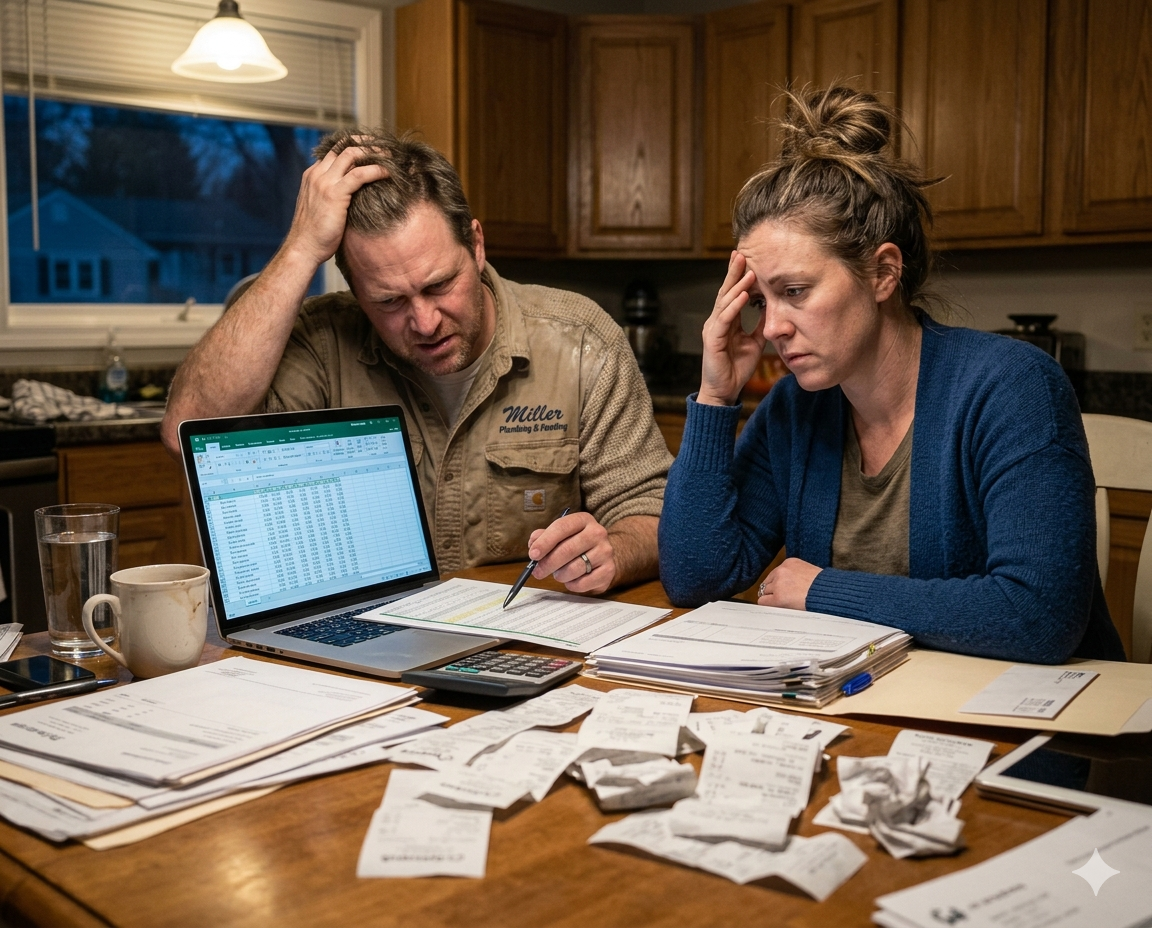
The most common objection to business management software isn’t “I don’t need it.” It’s “I can’t justify the cost right now.”
That hesitation is understandable. Running a trades business is expensive. Trucks, insurance, tools, materials, payroll — there’s always something that feels more urgent than a software subscription. But the math on contractor software is different from most business expenses, and most contractors who actually do the math find that hesitating cost them more than committing would have.
Here’s how to think about it.
The Cost of Not Having a System
Before calculating the ROI of software, calculate the cost of your current situation. Most contractors, when they actually add it up, are losing real money to operational gaps:
Estimates that go out late or get lost in follow-up. Industry data consistently shows that contractors who respond to leads within an hour close at a dramatically higher rate than those who respond within 24 hours. If your estimating process is slow — building estimates manually, sending from a generic email, following up from memory — you’re losing jobs to competitors who have it tighter.
Invoices that sit unsent. For every day an invoice isn’t sent, payment is delayed. Most contractors invoice slower than they should because it’s a manual, annoying task. The aggregate delay across all jobs adds up to thousands of dollars sitting in receivables that could be in your account.
Admin time that should be billable time. If you or your office manager is spending 10+ hours a week on scheduling, invoicing, chasing payments, and tracking job status — that’s time that either costs you in labor or costs you in foregone revenue if it’s your own time.
Deposits not collected. For contractors who don’t consistently require deposits, every job is a credit risk. Customers who back out after you’ve ordered materials cost you directly.
Add up those losses honestly. For most small trades businesses doing $300,000 to $1 million annually, the number is significant — easily $20,000 to $60,000 a year in lost revenue and wasted time.
What Software Actually Does for Your Revenue
Contractor business software doesn’t just make existing processes easier. It generates revenue that wouldn’t otherwise exist.
Faster estimates close more jobs. When estimates go out within hours instead of days, you win business that your slower competitors miss. A 10% improvement in close rate on a $600,000 pipeline is $60,000.
Automated follow-ups capture jobs that would go cold. A significant portion of estimates that don’t receive a response aren’t firm rejections — they’re people who got busy and forgot to decide. A two-day automated follow-up recaptures many of those. Even recapturing 5% of your estimate volume meaningfully moves revenue.
Automated review requests build your reputation. Contractors who consistently ask for Google reviews after completed jobs build a review base that drives inbound leads without any advertising spend. More reviews means better local search rankings, which means more inbound calls.
Customer portal reduces no-shows and late cancellations. When customers can see their appointment clearly, receive reminders, and confirm digitally, they show up. Fewer cancellations means fewer schedule gaps and more revenue per week.
The Math on a $400k Business
Let’s be conservative with a hypothetical $400,000 annual revenue business:
- 10% improvement in close rate from faster estimates: +$40,000
- 5% of cold estimates recaptured by automated follow-up: +$20,000
- 8 hours/week of admin time eliminated at $50/hr equivalent: +$20,800/year
- Reduced bad debt from deposit requirements: +$5,000
That’s $85,800 in recovered revenue and time against a software cost of roughly $2,400/year. The ROI is not 50%. It’s not 100%. It’s orders of magnitude above the cost.
Even if the real number is half that conservative estimate — even if the improvement is just 10% of what I described — the software still pays for itself many times over.
The First 30 Days
Most contractors see results quickly because the impact is immediate and concrete:
- Week 1: Estimate workflow tightens. Faster turnaround.
- Week 2: First automated follow-ups fire. Responses come in from estimates that had gone quiet.
- Week 3: Invoices go out same-day after jobs. Cash arrives faster.
- Week 4: A review request captures a 5-star Google review. You can see your admin hours dropping.
None of this requires a transformation. It requires setting up a system once and letting it run.
The contractors who hesitate on this decision are often the same ones who wonder why their more organized competitors seem to grow faster and stress less. Now you know why.